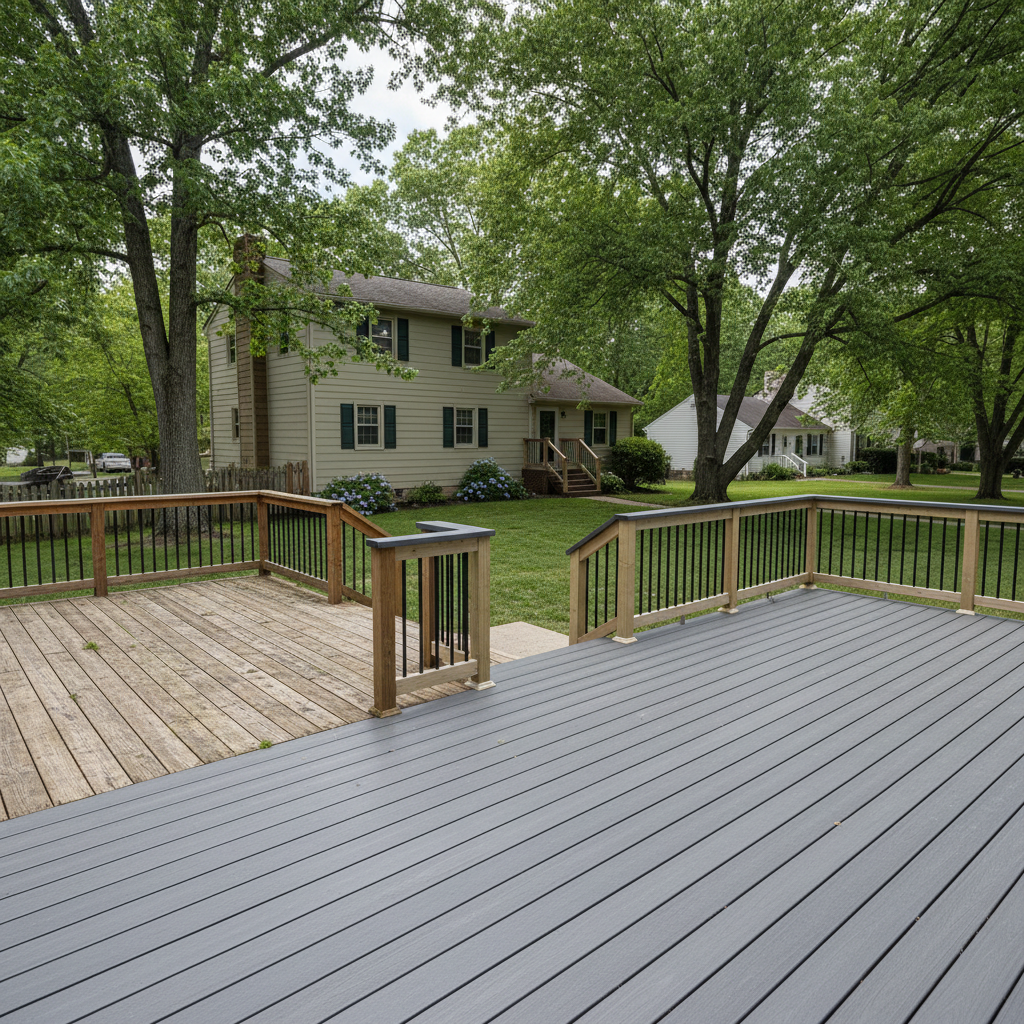
You're ready for a new deck, and you've heard all the buzz about composite. Less maintenance than wood, right? Mostly. But not all composite decking is created equal, and if you're building here in Dumfries, Virginia, you really need to know the difference between capped and uncapped composite. It's a big deal for how your deck will look and last, especially with our humid summers and those occasional heavy snows.
What's the Big Difference?
Think of it like this: uncapped composite is the original recipe. It's a mix of wood fibers and recycled plastic, pressed together. It was a huge step up from wood in terms of not rotting or splintering. But it still had some quirks.
Capped composite came along as an improvement. It's got that same core of wood and plastic, but then it's wrapped or 'capped' on three or four sides with a durable plastic shell. This shell is usually made from a tougher, more resilient polymer. It's like putting a really tough, protective skin on the board.
Durability: Where the Rubber Meets the Road (or Deck)
This is where capped composite really shines, especially for us here in Dumfries. That protective cap makes a huge difference:
- Stain Resistance: Uncapped composite can stain. Think about a spilled glass of red wine, BBQ grease, or even just leaves left to decompose on the surface. That stuff can soak into the wood fibers in uncapped boards. With capped composite, the spill sits on that plastic shell, making it much easier to wipe away.
- Fade Resistance: The sun here in Virginia can be brutal. Uncapped composite will fade over time, sometimes unevenly. The cap on modern composite decks is engineered with UV inhibitors, so it holds its color much, much better. Your deck will look newer, longer.
- Mold and Mildew: Our humidity, especially down by the Quantico Creek or in those shadier spots in Montclair, is a breeding ground for mold and mildew. Uncapped composite, because it has exposed wood fibers, can be more susceptible to mold growth, which can be tough to clean completely. The dense, non-porous cap on capped composite makes it much harder for mold to take root.
- Scratch Resistance: While no deck is completely scratch-proof, the cap on these boards offers better resistance to scuffs and scratches from patio furniture, pet claws, or dropped tools.
Uncapped composite isn't 'bad,' it's just an older technology. It's more prone to showing its age faster in our climate.
Maintenance: Your Weekend vs. Your Deck
This is probably why most people choose composite in the first place, right? You want to enjoy your deck, not constantly work on it. Both types of composite require less maintenance than wood, but there's a clear winner here.
- Capped Composite: A simple wash with soap and water (or a composite deck cleaner) and a soft brush or pressure washer (on a low setting, from a distance) is usually all you need. That cap really does repel most dirt and grime.
- Uncapped Composite: You'll need to clean it more frequently and more thoroughly to prevent stains and mold. Sometimes, you might even need specific cleaners to deal with stubborn spots that have penetrated the surface. You'll also notice it's more likely to show water spots or 'streaking' after rain.
If you live in a wooded area, say near Leesylvania State Park, where leaves and pollen are always falling, you'll really appreciate the easier cleanup of a capped deck.
Appearance & Cost: The Trade-offs
Let's talk about how they look and what they'll cost you up front.
- Appearance: Modern capped composites have come a long, long way. They often have incredibly realistic wood grain patterns, multi-tonal colors, and matte finishes that look fantastic. Uncapped composites tend to have a more uniform, sometimes 'plastic-y' look. They also don't offer the same range of vibrant, long-lasting colors.
- Cost: This is where uncapped composite usually has an advantage. It's generally less expensive per linear foot than capped composite. You're paying for that extra layer of protection and the advanced aesthetics with capped boards.
So, you're looking at a higher initial investment for capped composite. But you have to weigh that against the long-term benefits.
My Recommendation for Dumfries Homeowners
Look, I've been building decks around here with Charis Deck Solutions for a long time. I've seen what our weather does to materials. For almost every homeowner in Dumfries, I'm going to recommend capped composite decking.
Yes, it costs a bit more upfront. But that extra investment pays for itself quickly in reduced maintenance, a deck that looks great for many more years, and less frustration. You won't be fighting stains, scrubbing mold, or watching your deck fade into a dull shadow of its former self. You'll spend less time cleaning and more time enjoying your outdoor space, which is the whole point of a deck, isn't it?
When you're comparing options, don't just look at the price tag. Think about the next 10, 15, 20 years. That's how long a good deck should last, and with capped composite, you're setting yourself up for success.